Engagement context
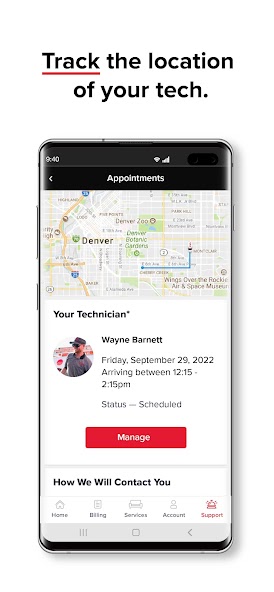
Mobile Tech Lead at Wipro, embedded with DISH Network’s engineering team in Denver, Colorado — January 2019 through January 2020. This was the same overall engagement as the DISH OTA Signal Meter case (see that case study for the companion scope). The MyDISH scope was the existing subscriber application — the app DISH Network’s customers use to manage their service — and the engineering team and infrastructure underneath it.
The problem
DISH Network’s MyDISH application was a production application with a 1M+ install base, built on a codebase that predated modern Android architecture patterns. The code worked, but it was written in Java across a codebase that had grown in layers over years, and the infrastructure underneath it was on-premises — a CMS and authentication systems that had never been lifted to cloud.
Maintaining a codebase of this vintage at subscriber scale is its own kind of pressure. Features have to ship without breaking what’s already working. The existing team had delivery obligations that didn’t pause for modernization work. A modernization effort that couldn’t coexist with the existing delivery cadence was not a real option.
There was also an organizational gap. The engineering team was not structured in a way that let innovation and maintenance coexist. Everyone was working out of the same queue, which meant innovation work — POCs, new-technology explorations — competed directly with the stability work that kept the subscriber app running. Both suffered.
The work
- Modernized the MyDISH application (1M+ users) — converted existing Java code to Kotlin and implemented features using Android Jetpack, working within a live production codebase at subscriber scale.
- Introduced DISH Network to AWS Enterprise Architecture: migrated the on-premises content management system to a cloud-based system, and linked the on-prem authentication systems with AWS for SSO-style access for authorized users.
- Introduced CI/CD pipeline to the team’s delivery process — automated build, test, and deployment for a workflow that had previously relied on more manual steps.
- Reorganized engineering teams into two separate tracks: BAU (business-as-usual) handling stability and subscriber-facing features, and New Technologies handling innovation, POCs, and forward-looking capabilities. This was an organizational design outcome, not an engineering deliverable.
- Delivered five proof-of-concept projects under the New Technologies track, each of which secured additional contract work for Wipro:
- A Virtual Reality application for pay-per-view streaming
- A modular Android application architecture for scaling multiple sub-modules independently
- An application to gather and surface management dashboard data
- A mobile application demonstrating new-technology capabilities for DISH Network’s internal stakeholders
- A redesign of internal applications as Progressive Web Apps for cross-platform compatibility
The outcome
DISH Network’s MyDISH application runs at a scale that makes modernization consequential — at the time of the engagement, 1M+ installs. The current Android Play Store listing shows 2.7M+. The modernization work shipped into a live production system.
The AWS migration moved critical infrastructure off on-prem and onto a managed cloud environment. The CI/CD introduction changed how the team shipped. Neither is a cosmetic change — both alter the cost structure and velocity of every subsequent release.
The two-track team reorganization separated concerns that had been competing for the same attention. The outcome: stability work became more predictable, and innovation work became possible to pursue without disrupting subscriber-facing delivery.
The five POCs generated direct follow-on contract value for Wipro.
What it demonstrates
This is Lead & Coordinate — and specifically the version of it where the deliverable is partly organizational. The team structure at the end of the engagement was different from the team structure at the start. That kind of outcome requires the ability to make the case for a process change, not just implement a technical one.
The modernization work demonstrates the ability to introduce new patterns into a mature, live codebase without regressions. The AWS and CI/CD introduction demonstrates infrastructure scope — this was not purely an Android engagement; it touched cloud architecture and deployment.
For clients evaluating Lead & Coordinate on a team that needs both modernization and organizational clarity: this is the reference case.